
Windows drops below 60% desktop market share for the first time in years
Windows drops below 60% desktop market share for the first time in years
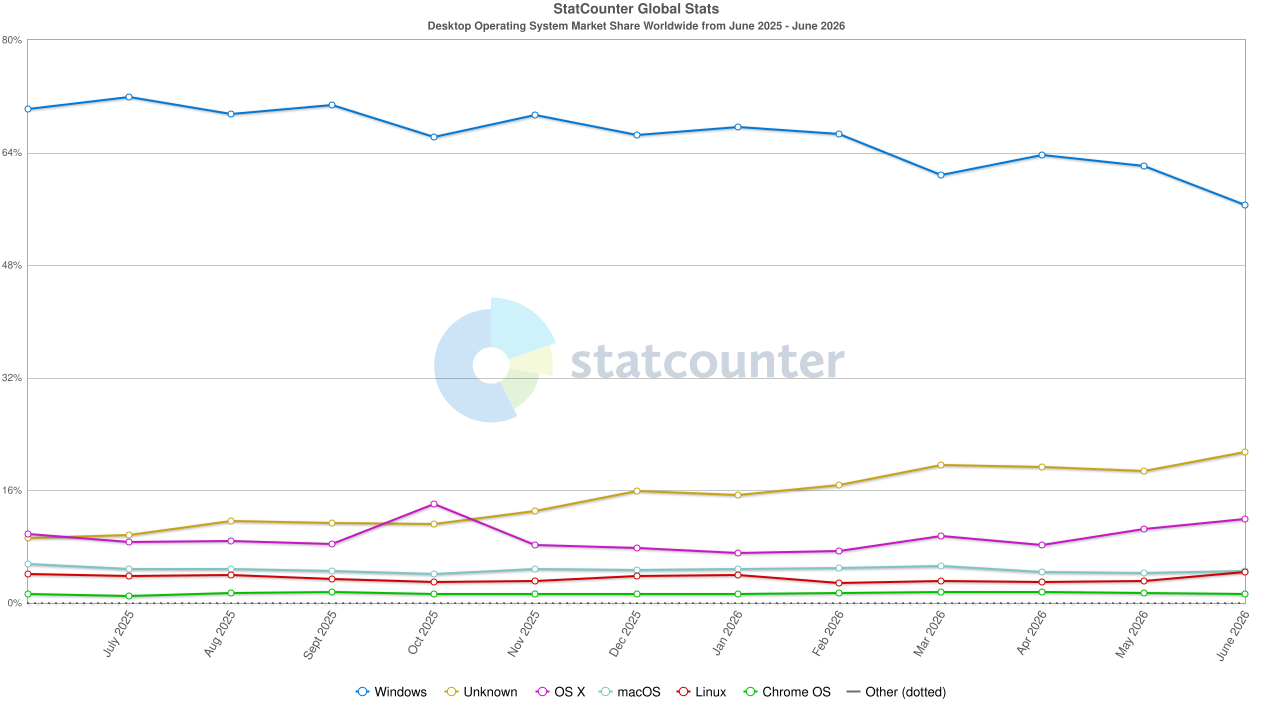
Windows has fallen below the 60% mark in global desktop market share for the first time in years. According to the latest StatCounter data, Microsoft’s operating system held 56.55% of the desktop market in June 2026.
Windows remains the dominant desktop operating system by a wide margin, but the latest figures show a gradual shift in the market. Desktop users today have more alternatives than they did in previous decades, with macOS, Linux, and Chrome OS all maintaining a presence.
Current desktop market shares
According to StatCounter’s June 2026 figures:
- Windows: 56.55%
- macOS: 16.37% (OS X 11.89% + macOS 4.48%)
- Linux: 4.39%
- Chrome OS: 1.21%
Windows is still the most widely used desktop operating system, but Apple has established itself as the clear second-largest platform. Linux has also reached one of its highest recorded desktop usage levels so far.
Why is Windows losing market share?
The decline is likely the result of several factors rather than a single cause.
One factor is the transition to Windows 11. The operating system introduced stricter hardware requirements, leaving many older PCs without official support. Some users have chosen to keep existing systems longer, while others have started looking at alternative operating systems.
Microsoft’s increasing focus on online accounts, cloud services, and data collection has also caused criticism among some users. These concerns have encouraged a portion of the market to explore other platforms.
At the same time, Linux has become easier to use on the desktop. Distributions such as Ubuntu, Fedora, Linux Mint, and openSUSE now provide mature desktop environments, improved hardware support, and simpler software installation. The popularity of the Steam Deck has also helped increase awareness of Linux gaming.
Linux gains attention, but Apple remains ahead
While Linux has grown, it is unlikely that most of the lost Windows share has moved directly to open source platforms. Apple remains the strongest alternative, with macOS holding a market share several times larger than Linux.
The reasons for choosing each platform are also different. Some users move to Linux because they want more control over their system, while others choose Apple for its hardware integration and ecosystem.
Linux remains a smaller desktop platform, but it continues to gain attention among developers, technical users, and gamers.
What StatCounter actually measures
StatCounter does not measure every installed operating system directly. Instead, it collects data from web traffic on websites that use its tracking technology.
The numbers therefore represent usage activity rather than the exact number of computers running each operating system. However, the methodology has remained consistent over time, making the data useful for identifying broader trends.
Conclusion
Windows remains the leading desktop operating system in 2026, but its position is less dominant than it was in the past.
The growth of macOS and the continued progress of Linux show that the desktop market has become more diverse. For users, this means more choices and more competition between platforms.